Raang (Color) Practice

Eh Raang Kihera?

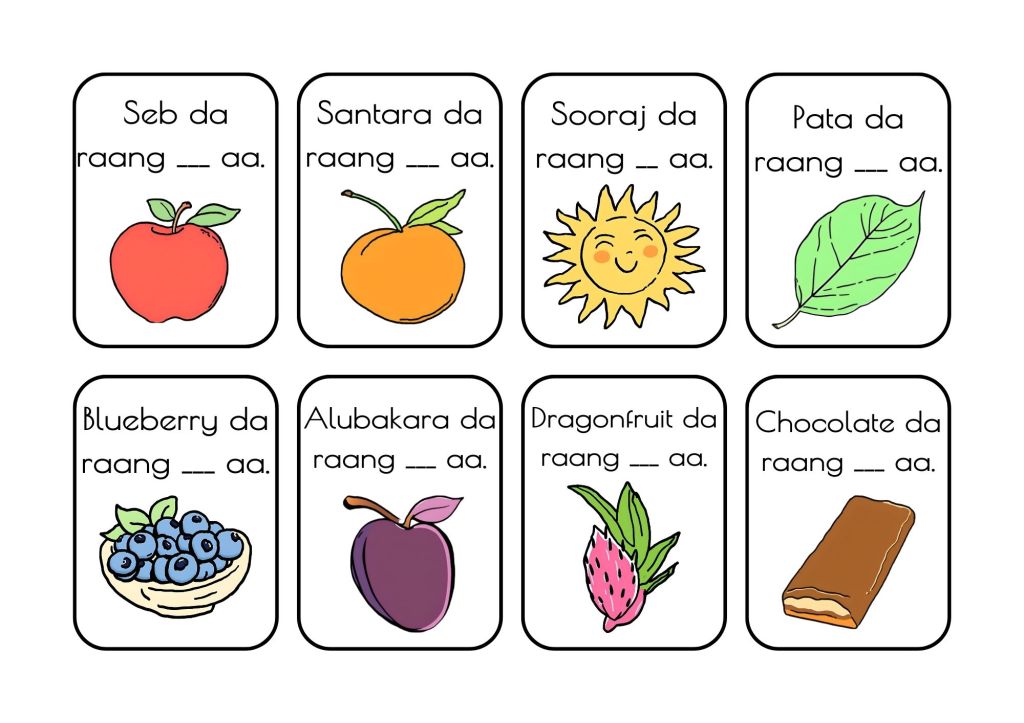
Harneet learned his colors in both Punjabi and English long ago. Because he did master them so early, I can sometimes get in a mindset of, “He already has this, I don’t need to work on it.” That is a bit of a slippery slope! There have been times when I ask Harneet what the color of something is in Punjabi and he really has to think about it. So I have to remind myself from time to time that I need to find ways to build on what we – WE – already know.

As I’ve mentioned before, sentence structure is important to us in addition to vocabulary memorization. Sentence structure is what allows us to really play with the language and communicate with understanding with our Punjabi family.

I created some flashcards for us to reach the above goal. Feel free to download and print if you’re on the same Punjabi learning journey! Follow this link:

https://sadayghar.my.canva.site/flashcards-punjabi-colors
Ways We Bring A Taste of Punjab to Home

One issue in our home is that our daily life can feel very isolated from India. My focus can be so much on the basics that must get done in a day that focusing on the target language and culture has a habit of being put on the back burner. 

Creating fun ways to integrate Punjabi language and culture into our Michigan home is something that is helping make the two worlds feel less separate. Today I share some of the tools I use to bridge that gap.

What are some of the ways you integrate your target culture into your household? Please share those with me, I would love to try those in our home and share how it’s working!

  • KHANA (food) 

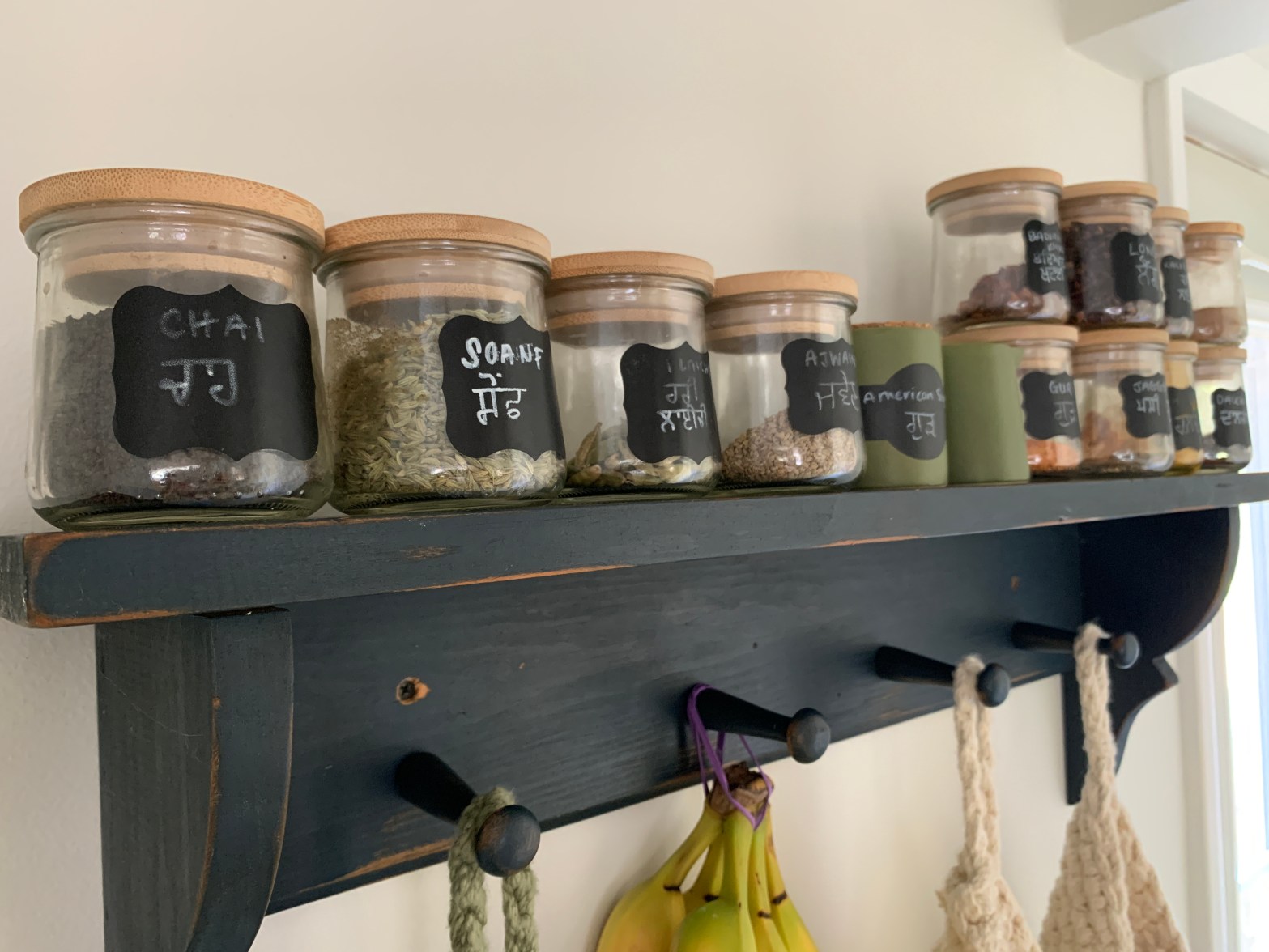
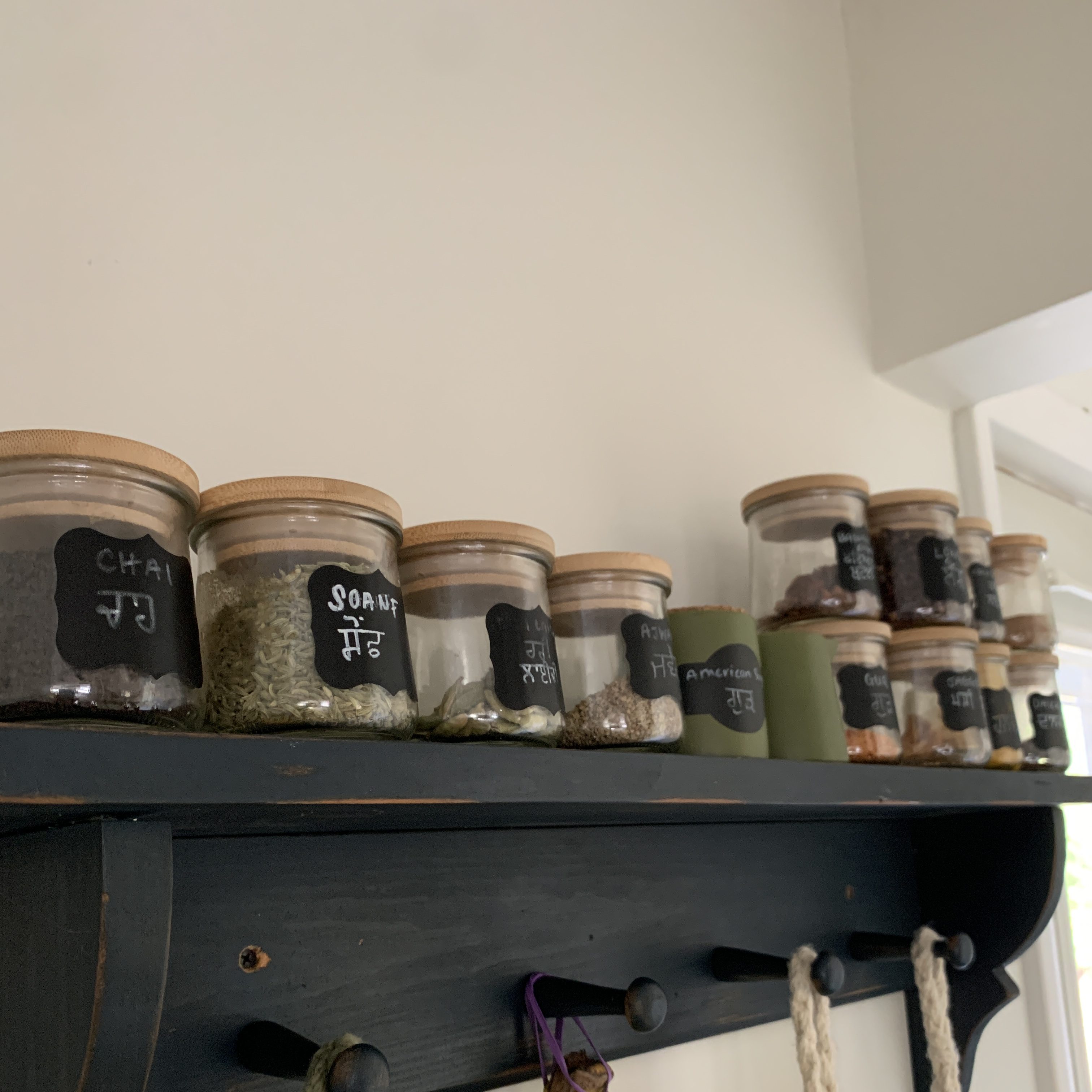
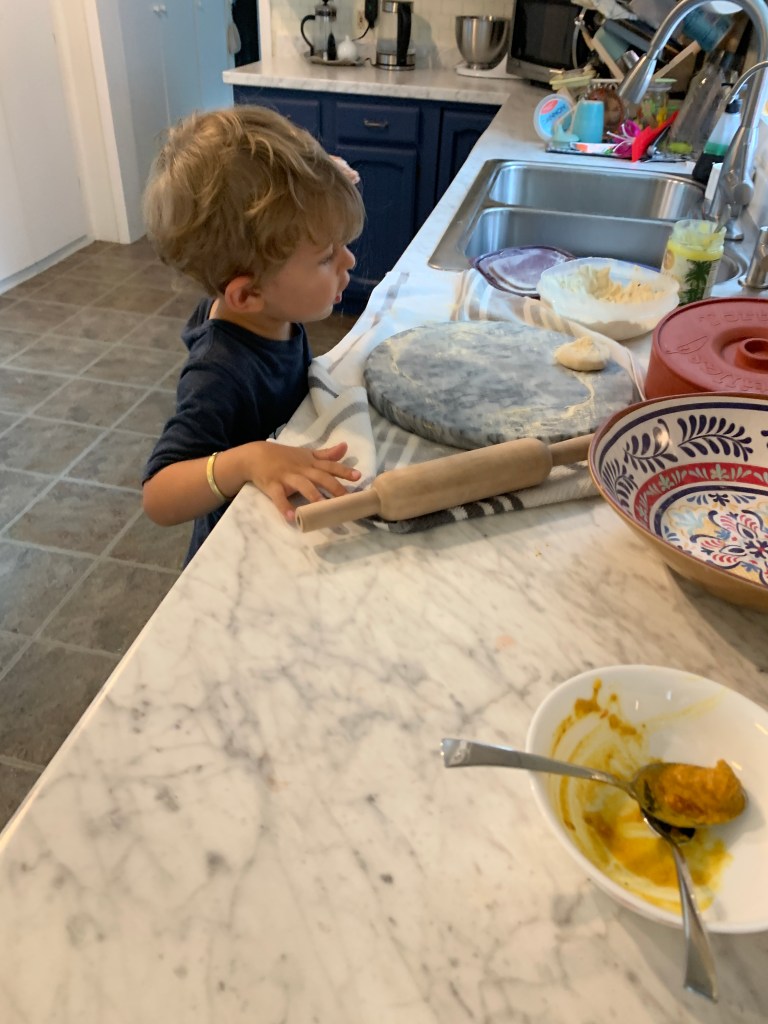
Our chai spices and other pantry goods are labeled in Gurmukhi so that every time those items are used it is reinforcing the vocabulary and the script in my brain. And the act of cooking – kneading the roti dough, rolling it out into an imperfect circle, having our noses filled with the smell of spices, the blend of flavors on our tongues – all of that becomes a part of us.

  • BAGA (garden) 

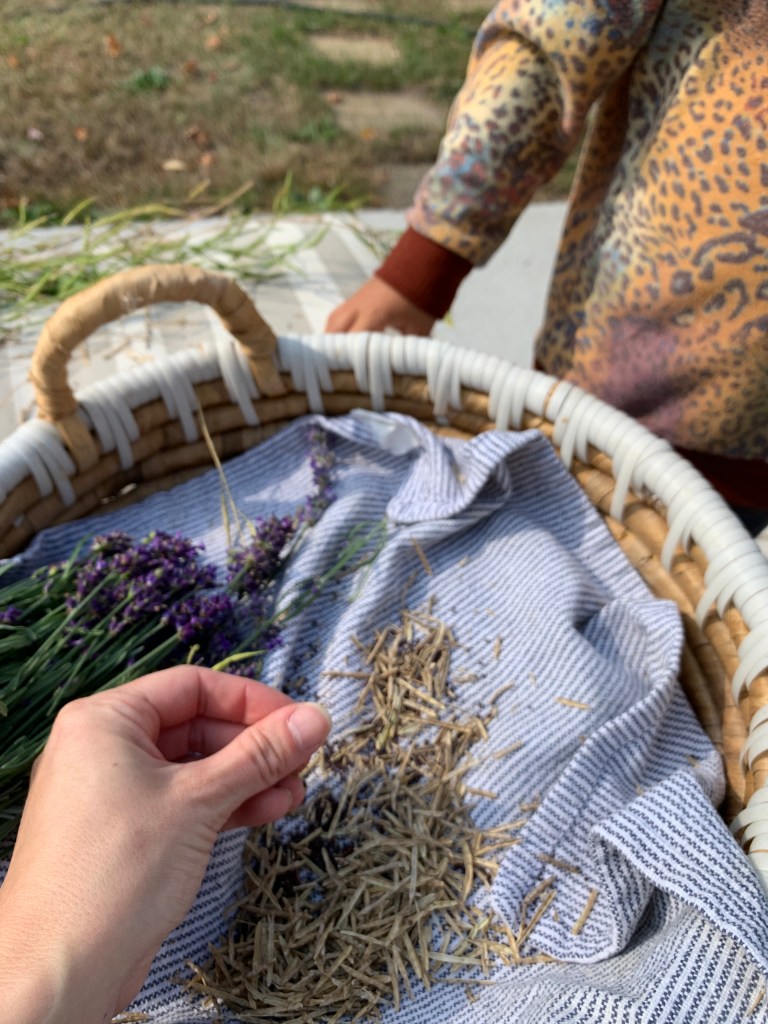
In our garden this summer, I planted sarson (mustard) plants among other things. It’s only a very small plot but seeing the yellow petals, practicing naming the plants with Harneet, and harvesting by hand like we would do in Punjab helps us feel connected to that sense of place.

  • SAKULA (school)

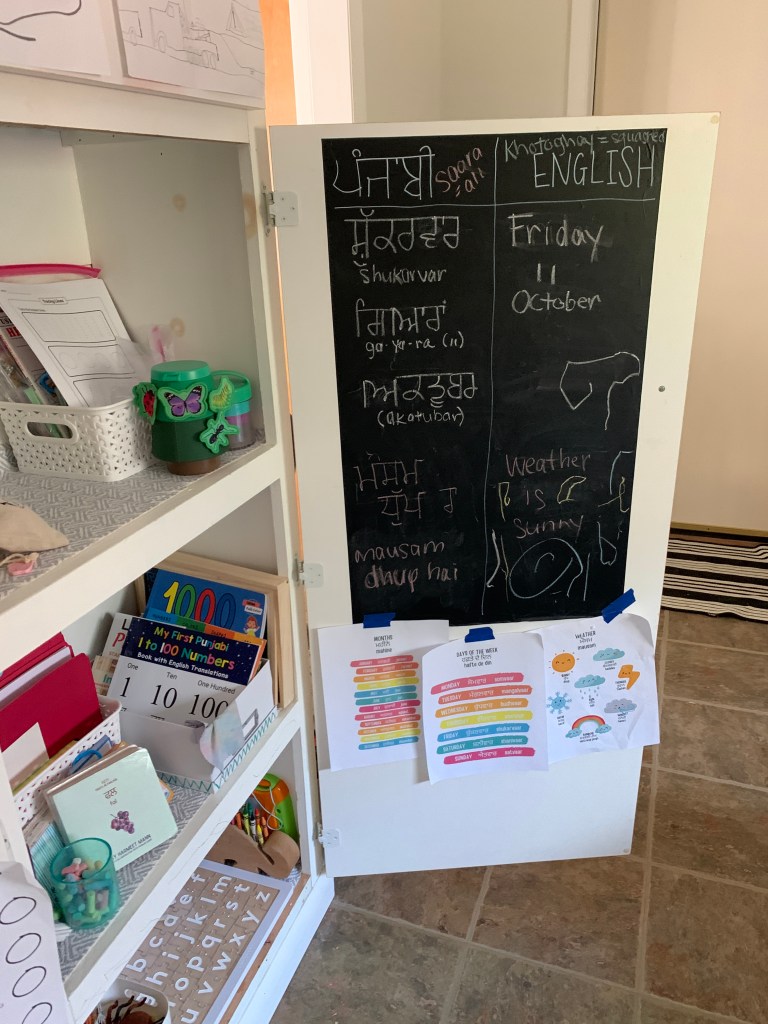
When creating our little homeschool space for Harneet, we have both English and Punjabi highlighted as we practice days of the week, the weather and all of our other learning. (More on those specifics in future posts.)

  • YADAM (memories)

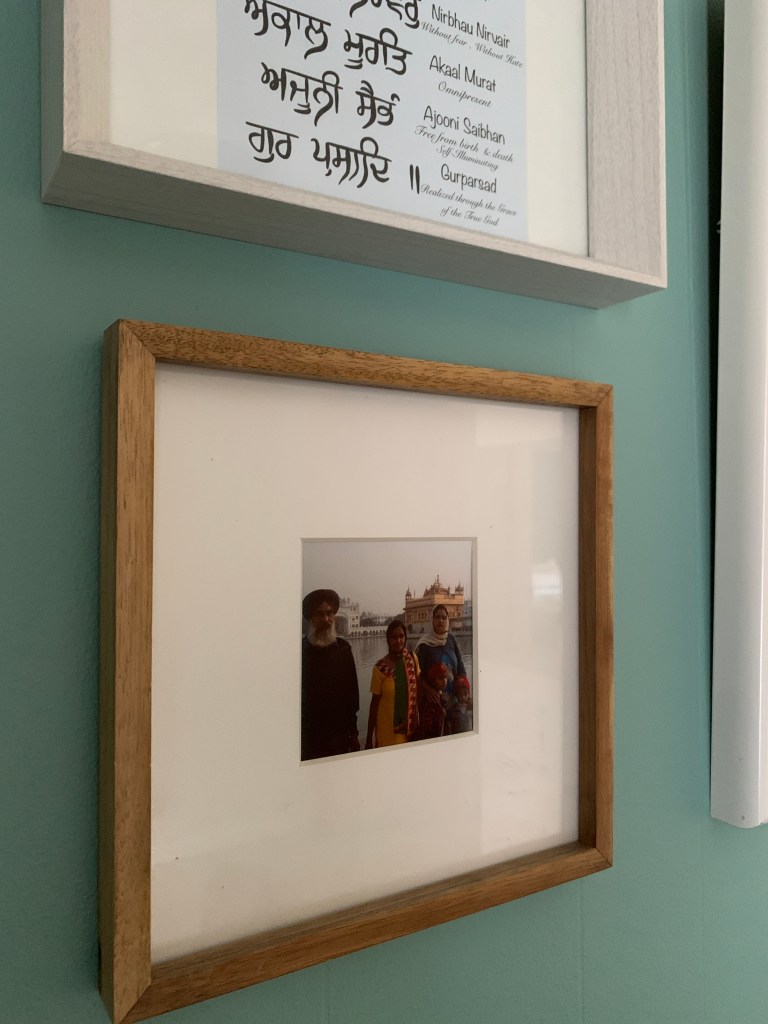
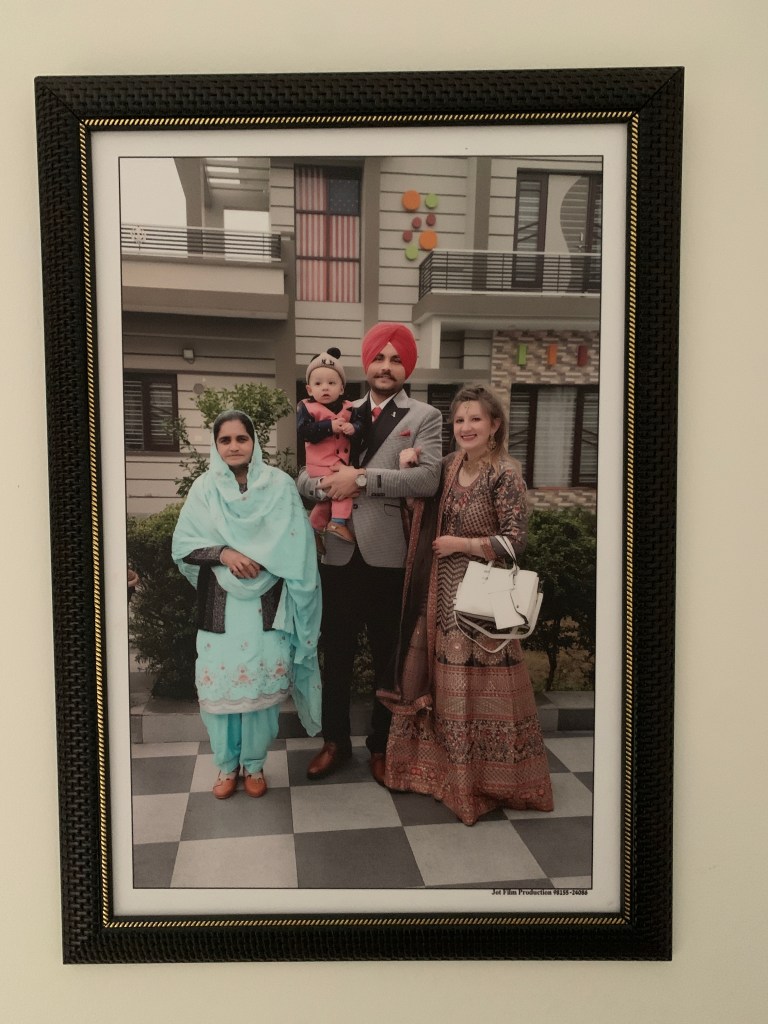
Pictures on display of our time together in Punjab, especially with family members. This prompts us to talk with Harneet about those memories, about how that is also our home, our family who we love, what we want to do next time we go to India, and most importantly that India is a part of his identity.

This Week’s Resource: Flashcards

Sat Sri Akal!

How many flashcard sets have you been gifted for your child’s learning? How many of them that you received were in Punjabi (or whatever your target language might be)? Zero? Same.

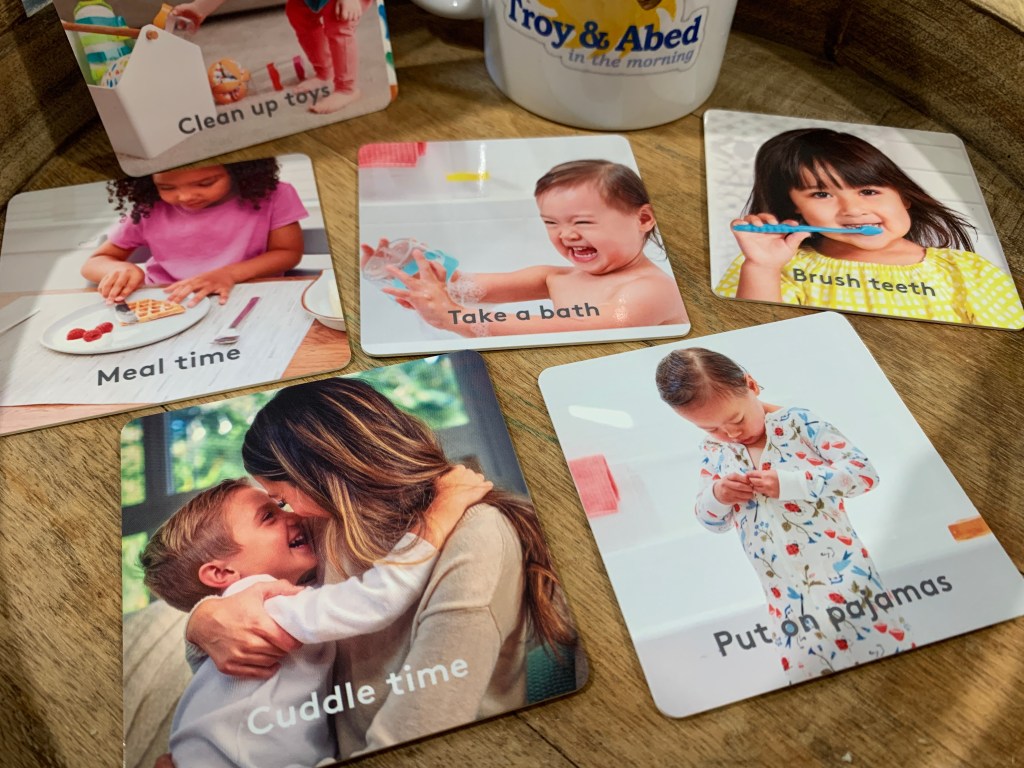
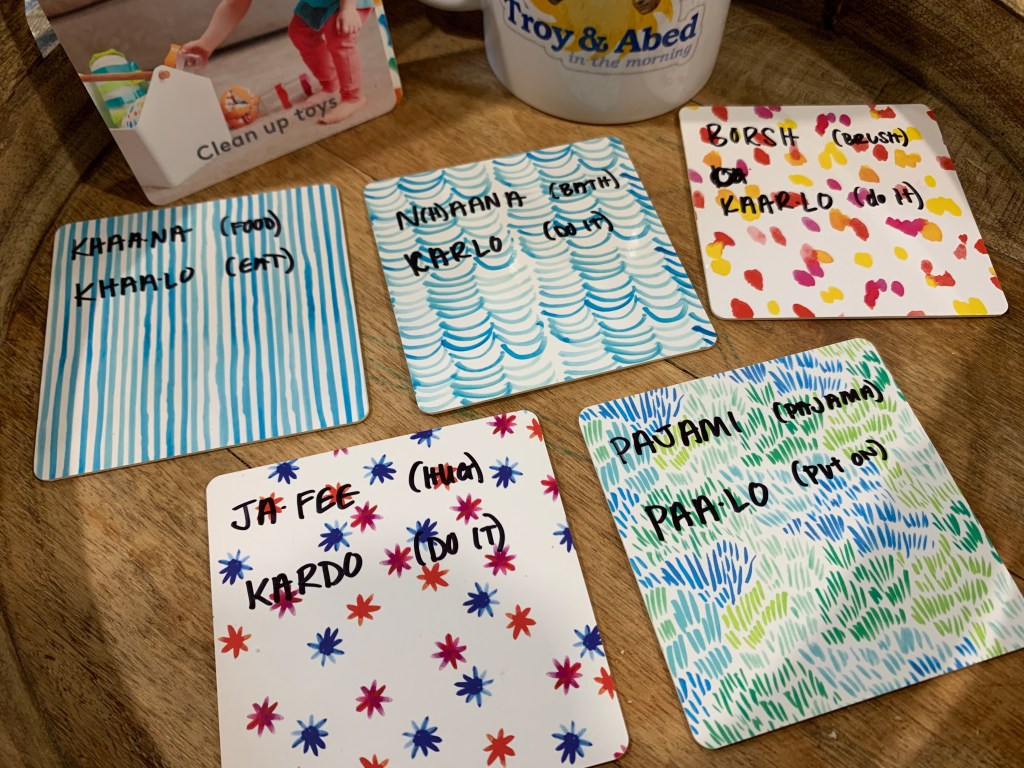
Simplest fix? Take my existing flashcards and grab my permanent marker.

Is it as aesthetically pleasing as I would like. Certainly not. Is my Punjabi grammar perfect? Also certainly not; so if you’re a native Punjabi speaking please feel free to offer me corrections!

I really prefer focusing on phrases as opposed to just vocabulary so that we can better master sentence structure. Having hundreds of individual nouns stored in my head is great. However, I want to encourage myself and Harneet to be able to communicate complete thoughts in Punjabi, so adding in sentence structure wherever I can is the goal.

Harneet was gifted a Lovevery subscription for a couple of years so I’ve adapted a few items. These ones are all about daily activities and chores. So many benefits to using these:

  1. They encourage independence for completing daily life skills.
  2. Writing them myself helps the vocabulary stick in my brain so I can model language.
  3. Our English-speaking family living near us can also practice with Harneet.
  4. Flashcards can easily be turned into games to make learning more fun.
  5. Since I’m not spending time and money making flashcards from scratch or searching for them online, it is budget-friendly.
  6. Minimalist, as opposed to having multiple flashcards sets to keep track of.
  7. Normalizes Punjabi along with English, as opposed to it always being compartmentalized.