One issue in our home is that our daily life can feel very isolated from India. My focus can be so much on the basics that must get done in a day that focusing on the target language and culture has a habit of being put on the back burner.
Creating fun ways to integrate Punjabi language and culture into our Michigan home is something that is helping make the two worlds feel less separate. Today I share some of the tools I use to bridge that gap.
What are some of the ways you integrate your target culture into your household? Please share those with me, I would love to try those in our home and share how it’s working!
- KHANA (food)
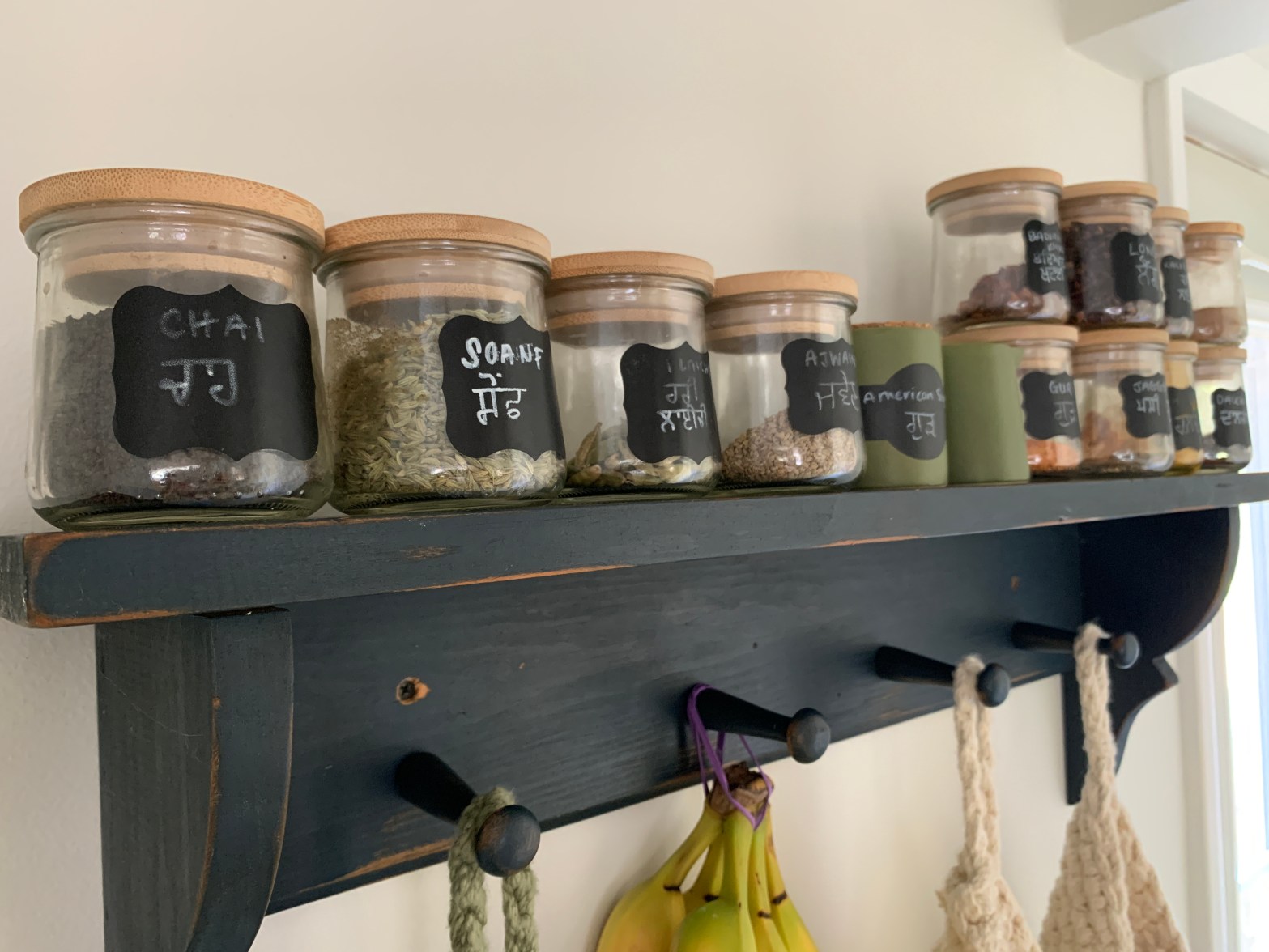
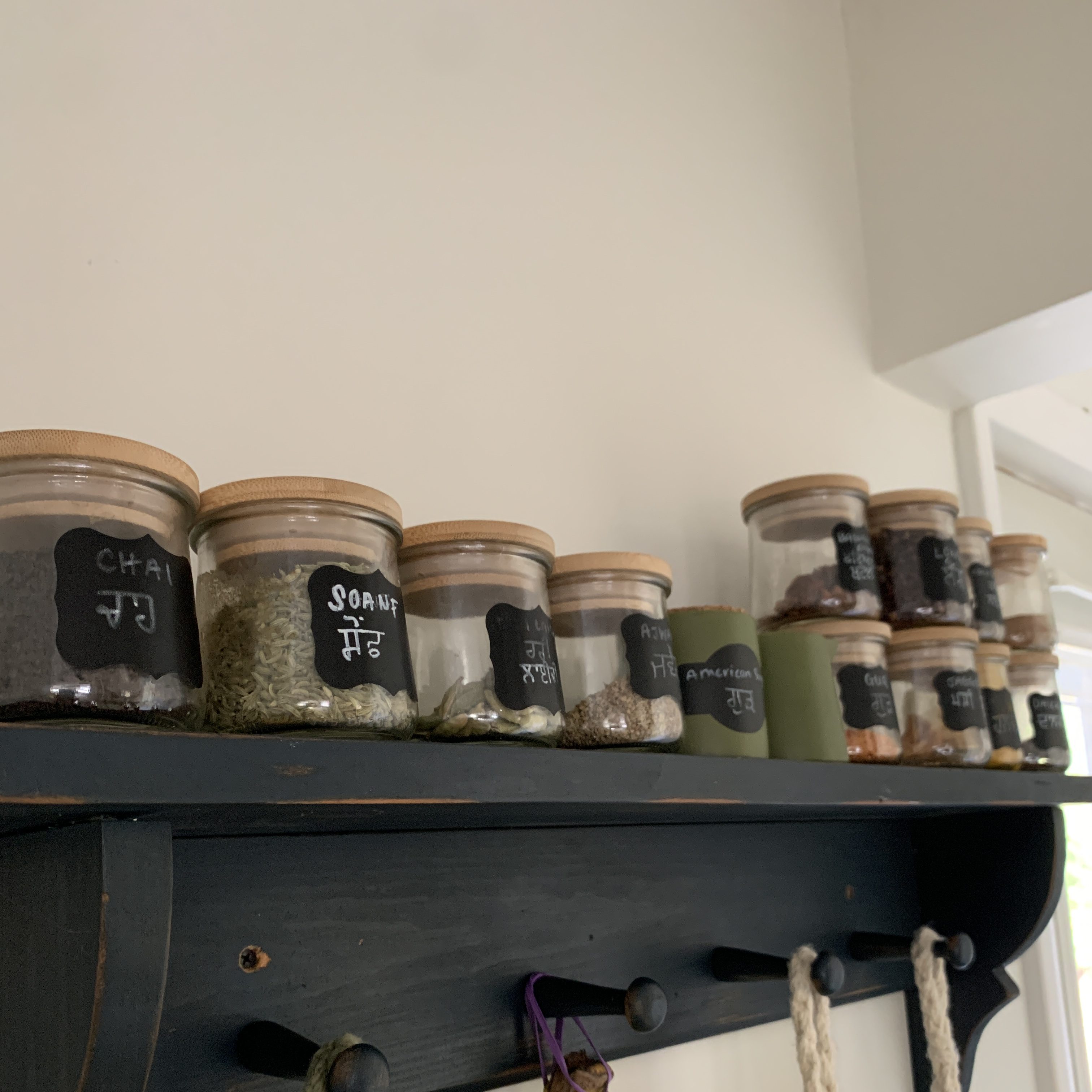
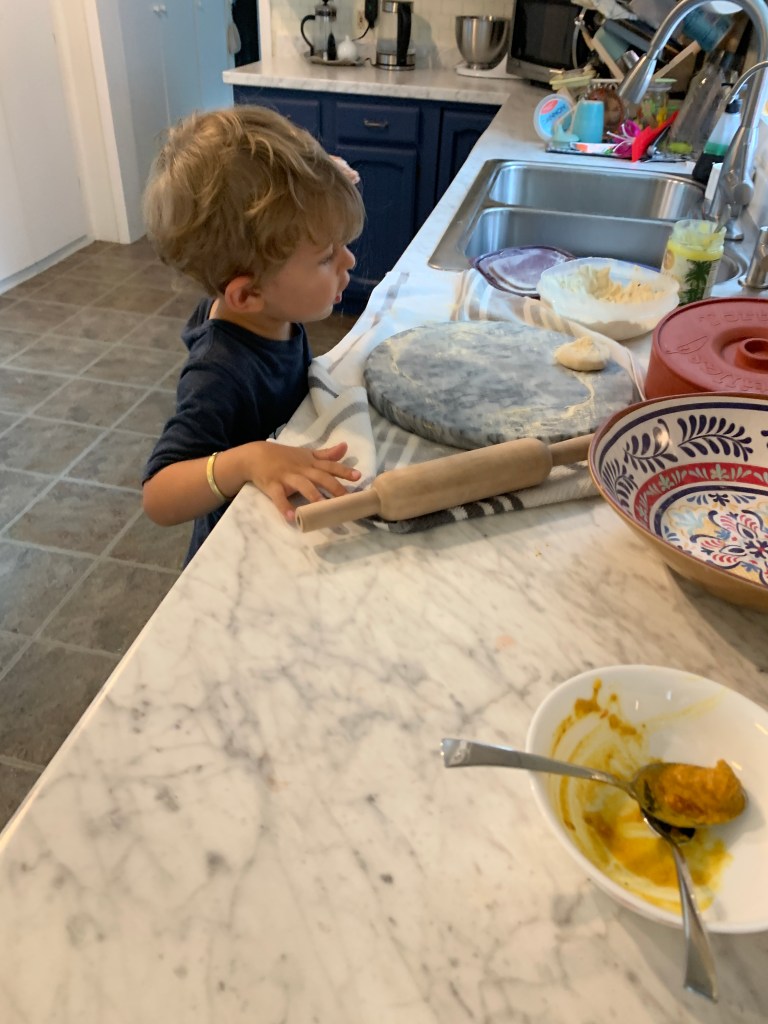
Our chai spices and other pantry goods are labeled in Gurmukhi so that every time those items are used it is reinforcing the vocabulary and the script in my brain. And the act of cooking – kneading the roti dough, rolling it out into an imperfect circle, having our noses filled with the smell of spices, the blend of flavors on our tongues – all of that becomes a part of us.
- BAGA (garden)
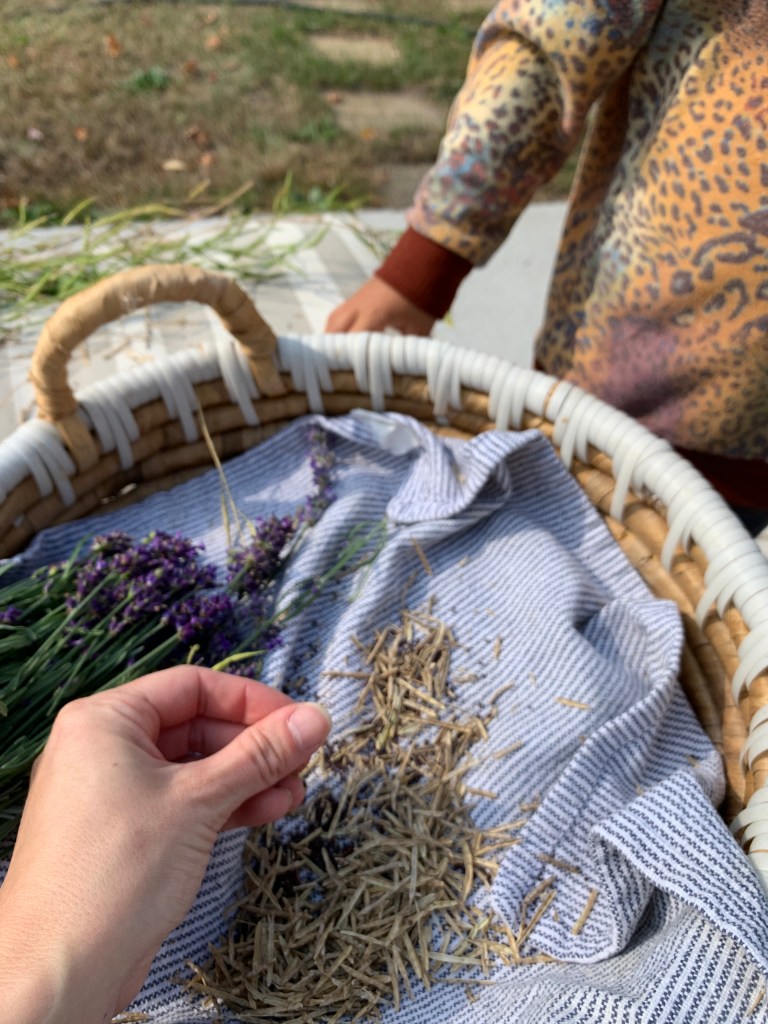
In our garden this summer, I planted sarson (mustard) plants among other things. It’s only a very small plot but seeing the yellow petals, practicing naming the plants with Harneet, and harvesting by hand like we would do in Punjab helps us feel connected to that sense of place.
- SAKULA (school)
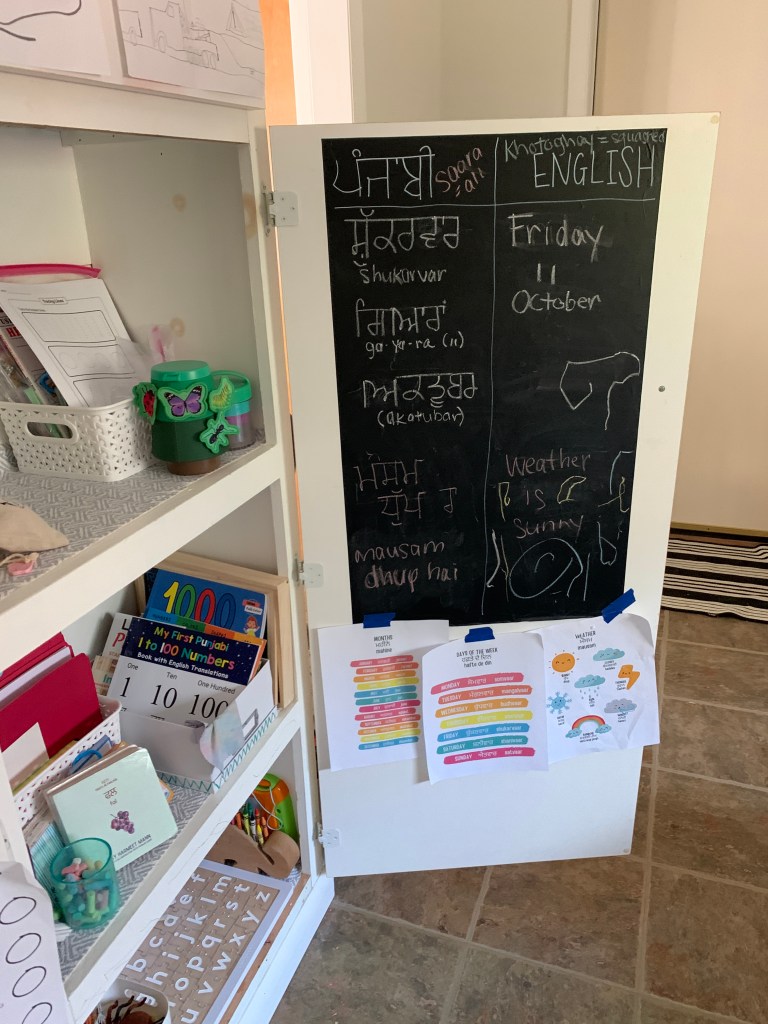
When creating our little homeschool space for Harneet, we have both English and Punjabi highlighted as we practice days of the week, the weather and all of our other learning. (More on those specifics in future posts.)
- YADAM (memories)
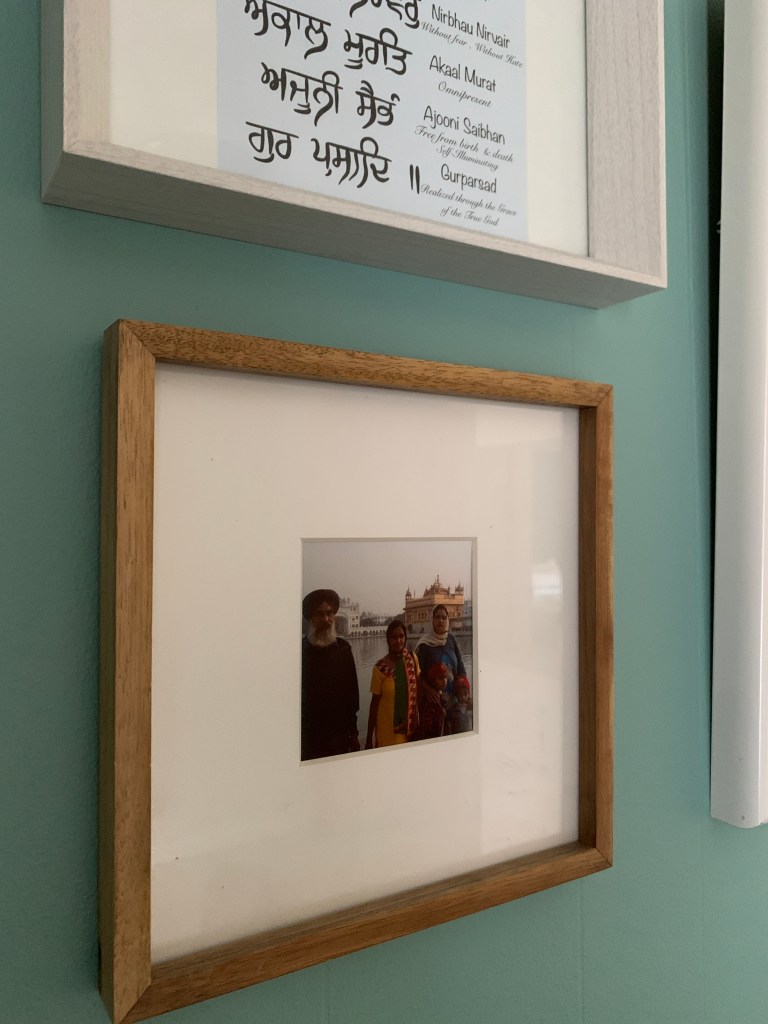
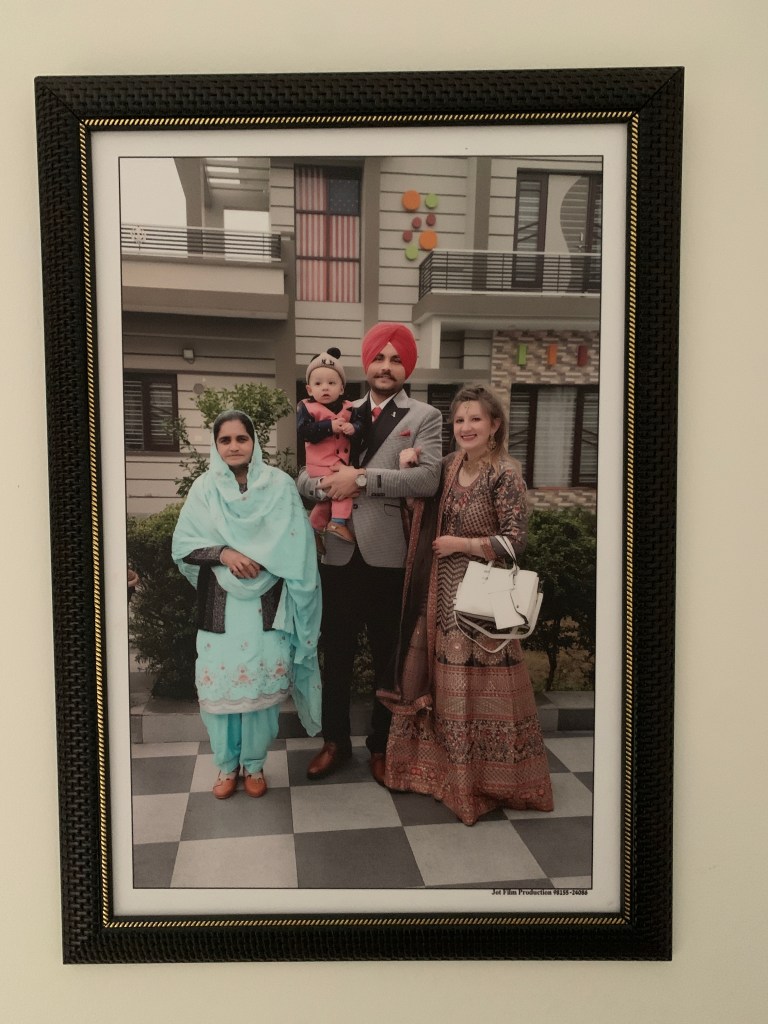
Pictures on display of our time together in Punjab, especially with family members. This prompts us to talk with Harneet about those memories, about how that is also our home, our family who we love, what we want to do next time we go to India, and most importantly that India is a part of his identity.